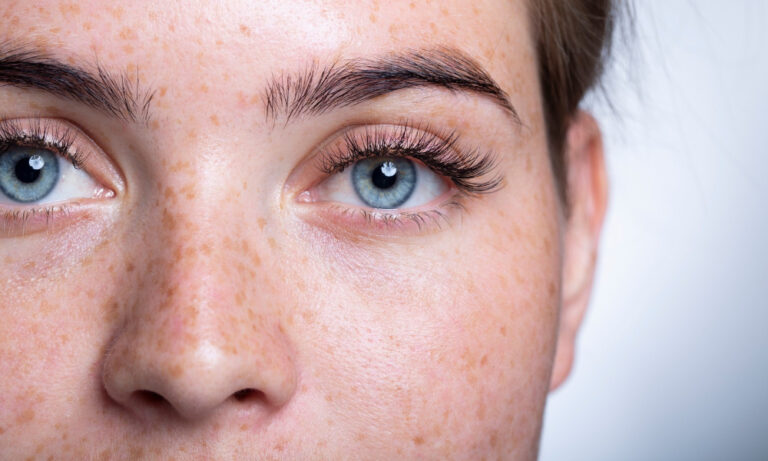
There’s a word for the facial hairs that sprout randomly from the lips and chins of women after they reach a certain age: normal.
While many of us cringe at the topic, it seems to be one of those things that’s not often talked about. Instead, we spend more time absent-mindedly stroking these strangely persistentand coarse strands that arrive out of nowhere, or trying to vanquish them, often unsuccessfully.
Beauty standards and cultural expectations have long shaped how we feel about face and body hair but there’s no inherent reason we need to remove or alter it. But if you’ve ever been curious about the topic, or have wondered about the best way to get rid of the lip and chin tufts – dive in.
What causes facial hair?
As women approach and enter menopause, the balance of hormones in the body shifts. As oestrogen drops, testosterone can become more influential. This can transform hair follicles typically found on women’s faces that
produce fine downy hair known as peach fuzz, to follicles that create thicker, darker hair.
“It’s a very normal part of the body’s evolution over time, even if it’s rarely talked about openly,” says Leanne Doré of Illuminate Me beauty therapy. “It is far more common than most women realise and absolutely nothing to feel embarrassed about.”
She says whether or not you will get these stray hairs or pesky patches often comes down to genetics as, much like pattern baldness, your hair follicles’ sensitivity to hormonal changes differs from person to person. For some women, facial hair growth can happen at any age caused by Polyendocrine Metabolic Ovarian Syndrome (known until recently as Polycystic Ovarian Syndrome) or a condition known as hirsutism.
If a significant amount of hair arises suddenly, it’s worth seeing a doctor.
How to remove facial hair
There are many ways to remove this hair, such as tweezing, waxing, threading, shaving or laser, some longer lasting than the others.
To quash one pervasive myth outright, none of these methods will cause the hair to grow back thicker. New growth can feel thicker after shaving or dermaplaning (where a scalpel-like tool is used to exfoliate the top layer of dead skin cells and fine downy hair), as the tip is blunt, rather than naturally tapered.
At-home hair removal creams partially dissolve hair below the surface, so regrowth often feels softer.
“Everyone is different, and ultimately the best method of hair removal comes down to personal preference, skin type and hair colour,” says Doré.
“Plucking the occasional stray hair is perfectly fine, but it’s important to be gentle and precise,” she says, having seen those with thickened or damaged skin on the chin area caused by years of excessive tweezing and
pinching at the skin.
“Make sure you have good light and a magnifying mirror to ensure precision plucking and help avoid unnecessary trauma to the skin.” Good-quality tweezers that have been cleaned well are also essential.
Bleaching at home is cheap and easy but works better for finer, softer hair and there are downsides.
“Side effects can include irritation, redness, blistering and post-inflammatory pigmentation, especially if the skin becomes inflamed,” says Doré.
She calls in-clinic laser the ‘gold standard’ of hair removal, as it delivers the best long-term results, but it is far less effective on blonde, red or grey hair, so not suitable for everyone.
Laser specialist Zoe Wardlow of hair removal chain Off & On says laser hair removal works through a process called selective photothermolysis. “The laser light is absorbed by the melanin [the pigment] in the
hair, which converts it into heat.” This is why the darker the hair, the better. “That heat travels down into the follicle, damaging it and reducing its ability to produce new hair.”
While it provides lasting results, Wardlow says the number of treatments needed varies from person to person. “Facial hair often requires more sessions because of its faster growth cycle and hormonal impacts.”
Other methods such as electrolysis and IPL (Intense Pulsed Light) are still available elsewhere but Wardlow says the speed, precision and lasting results have made laser incredibly popular as a treatment option.
At-home IPL
Laser hair removal remains largely a salon-only treatment due to its cost and complexity, but at-home IPL devices such as Philips Lumea are now available. They require multiple sessions and ongoing maintenance, and should be used with care.
Since they rely on that contrast between hair and skin, those with darker skin or very light hair should look at salon options with a trained professional to avoid the risk of burns or pigmentation changes.