


When it comes to a Mediterranean diet and inflammation, it’s important to understand what inflammation really is.
Inflammation is the complex biological response of the body’s tissues to infection and injury. Systemic inflammation is a chronic, low-grade immune response that damages healthy tissues and is now recognised as a primary precursor to chronic conditions, including heart disease.
In the first instance, our immune defence system neutralises threats such as viruses and infections by activating molecules that promote inflammation and destroy the threats.
Once their job is done, inflammation-resolving molecules are activated to clear the damaged tissue components so that the body can begin to heal.
However, if the immune system is repeatedly activated due to threats and is not allowed to heal properly, a persistent (or chronic) low-grade inflammation occurs.
Inflammation and Heart Disease
How Inflammation Drives Heart Disease
-
The Initial Injury: High blood pressure, smoking, or excess blood sugar causes microscopic damage to the inner lining of your blood vessels (the endothelium).
-
The Immune Response: Your body perceives this damage as an injury and sends inflammatory cells to fix it.
-
Plaque Formation: These cells trap circulating LDL cholesterol inside the artery wall. As the immune system tries to clean up the cholesterol, it creates a toxic, fatty streak. Over time, this hardens into a plaque (atheroma).
-
The Rupture Risk: Inflammation doesn’t just build the plaque; it weakens the fibrous cap covering it. If the inflamed cap ruptures, it triggers a blood clot (thrombus) that can block the artery entirely, leading to a heart attack or stroke.
The Systemic Domino Effect
-
The Brain: Neuroinflammation is now heavily linked to brain fog, depression, and neurodegenerative diseases like Alzheimer’s and Parkinson’s.
-
The Joints: Inflammatory cytokines attack joint tissue, accelerating wear and tear (osteoarthritis) or triggering autoimmune responses (rheumatoid arthritis).
-
The Organs & Metabolism: Inflammation interferes with how insulin works, driving insulin resistance, fatty liver disease, and Type 2 diabetes.
What Stokes the Fire?
-
Visceral Fat: Belly fat isn’t just dormant tissue; it acts like a toxic organ, actively pumping out inflammatory chemicals (adipokines) into your bloodstream.
-
Chronic Stress: Constant stress keeps cortisol levels artificially high. Eventually, your immune system becomes “deaf” to cortisol’s regulating signals, allowing inflammation to run wild.
-
Poor Gut Health: An imbalance of gut bacteria (dysbiosis) allows toxins to leak through the intestinal wall into the bloodstream, triggering a constant immune response.
-
Ultra-Processed Diets: High intakes of refined sugars, trans fats, and highly processed carbohydrates signal danger to the body, keeping the immune system on high alert.
Where a Mediterranean diet comes in
Interestingly, the Mediterranean diet – compared to all other healthy diets – has been found to be protective against all the conditions mentioned above, leading many scientists to hypothesise that the Mediterranean diet benefits may be mainly due to its ability to reduce systemic inflammation.
These conditions have also been linked to a disturbed gut microbiome.
Inflammatory cells release inflammatory chemicals that destabilise the fibrous cap covering the plaque, releasing its contents into the bloodstream of the coronary artery lumen (inside the tube of the artery).
When plaques rupture, their components block blood supply to the heart, resulting in a heart attack.
Thanks to recent advances in imaging technologies it is now possible for us to see inflammatory cells inside blood vessels; they have been identified in greater numbers in patients who have damaged heart tissue following a heart attack.
Consequently, reducing inflammation has emerged as an important target for therapies in preventing or treating coronary heart disease.
The gut microbiome and inflammation
Bacteria live in a variety of different locations in the human body including the gut, which is home to trillions of microorganisms.
In fact, the colon is one of the most densely populated bacterial habitats on earth.
The study of gut-dwelling bacteria is one of the most rapidly moving fields in research today thanks to promising interventions that focus on the health of the gut microbiome (all the microbes living in the gut) in order to maintain health and quality of life.
The microbes living in the gut offer many health benefits by participating in digestion and absorbing nutrients.
Importantly, they also play a significant role in maintaining a barrier between the contents in the gastrointestinal tract and the body and participating in immune responses to kill harmful bacteria.
A healthy microbiome
When a healthy microbiota is disrupted, it results in an imbalance between protective and harmful bacteria – this is known as dysbiosis.
This condition is often characterised by reduced microbial diversity. Fewer beneficial bacteria mean the barrier between the gut and the body is harder to maintain, resulting in a ‘leaky’ gut that allows undesirable bacteria to migrate from the intestinal environment to the bloodstream, promoting inflammation.
Emerging research is pointing to a disturbed or ‘dysbiotic’ gut microbiome being the primary source of inflammation.
Additionally, gut dysbiosis can also contribute to the development of obesity and insulin resistance, which are both important contributors to cardiovascular disease and type 2 diabetes. Given this, it’s easy to see why maintaining a diverse and healthy gut microbiome is emerging as a strategy for promoting health, and preventing and managing disease.
Though genetics plays a role in gut microbiota, diet strongly influences gut microbial community structure and function.
A healthy diet rich in plants sustains a healthy gut environment, but an unhealthy diet low in fibre with excess processed foods is likely to affect microbiota functional capability and contribute to disease susceptibility.
Prebiotic and probiotic-rich foods
A key benefit of the Mediterranean diet in maintaining a healthy microbiome is the abundance of foods with probiotic and prebiotic functions.
Probiotics (meaning ‘for life’ in Greek) are living microorganisms that provide health benefits when consumed.
Your body is full of bacteria, both good and bad, and this community of bacteria is called the microbiome.
Probiotics
Probiotics are live bacteria, similar to those already found in the microbiome colony in the gut, but they can also be yeasts. Common probiotic bacteria groups include Lactobacillus and Bifidobacterium.
They are available as supplements (in various forms) and are produced from foods by bacterial fermentation.
Any food that has been fermented is likely to contain probiotics. Probiotics are often called ‘good’ or ‘helpful’ bacteria because they help to keep your gut healthy.
Prebiotics
Prebiotics are dietary fibres that help feed the friendly bacteria in the gut. These fibres are found in a number of foods and are usually resistant to digestion.
Because of this, they are able to reach the lower gut (large bowel) undigested. They are consumed by the friendly bacteria (probiotics) via fermentation.
What foods reduce low-grade inflammation?
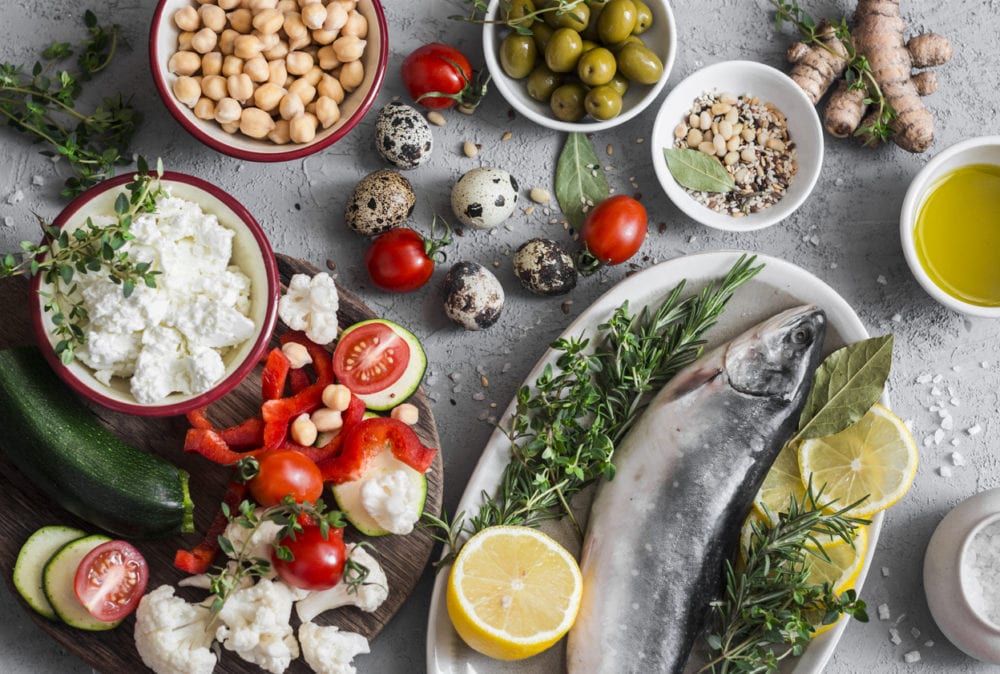
Here are 20+ prebiotic and probiotic ingredients in the Mediterranean diet that reduce inflammation.
Probiotics
- Olives
- Feta and goat’s cheese
- Kefalograviera (similar to gruyere) Kefalotiri
- Mizithra (whey cheese)
- Gouda and cheddar
- Greek-style yoghurt
- Trahana** (fermented wheat in sour milk) Sourdough bread
Prebiotics
- Dark green leafy veggies, especially dandelion leaves
- Cabbage, beetroot, carrots
- Artichoke, asparagus, green beans
- Garlic, onions, leeks, spring onions
- Tomatoes, eggplant, zucchini, pumpkin, sweet potato
- Fennel bulbs
- Peas and split peas
- Lentils, chickpeas, beans, lupins
- Barley, spelt, wheat bread (toasted), oats (raw), gnocchi, couscous
- Potato, rice, pasta (cooked and cooled*)
- Apples, pears, plums, berries, figs
- Nectarines, apricots, white peaches, watermelons, pomegranates
- Lemon, oranges, grapefruit
- Pistachios, hazelnuts, almonds, walnuts, tahini
- Olives and extra-virgin olive oil Herbs and spices
- Grapes, grape vinegar, red wine, spirits made from grapes (raki)

3 recipes for a Mediterranean diet
Casarecce with Mediterranean Vegetables and Salted Ricotta
Extract from The Heart Health Guide by Dr Catherine Itsiopoulos, Published by Macmillan, RRP $34.99, Photography by Rob Palmer.


